What New Hampshire’s House Bill 60 Means for Landlords and Tenants
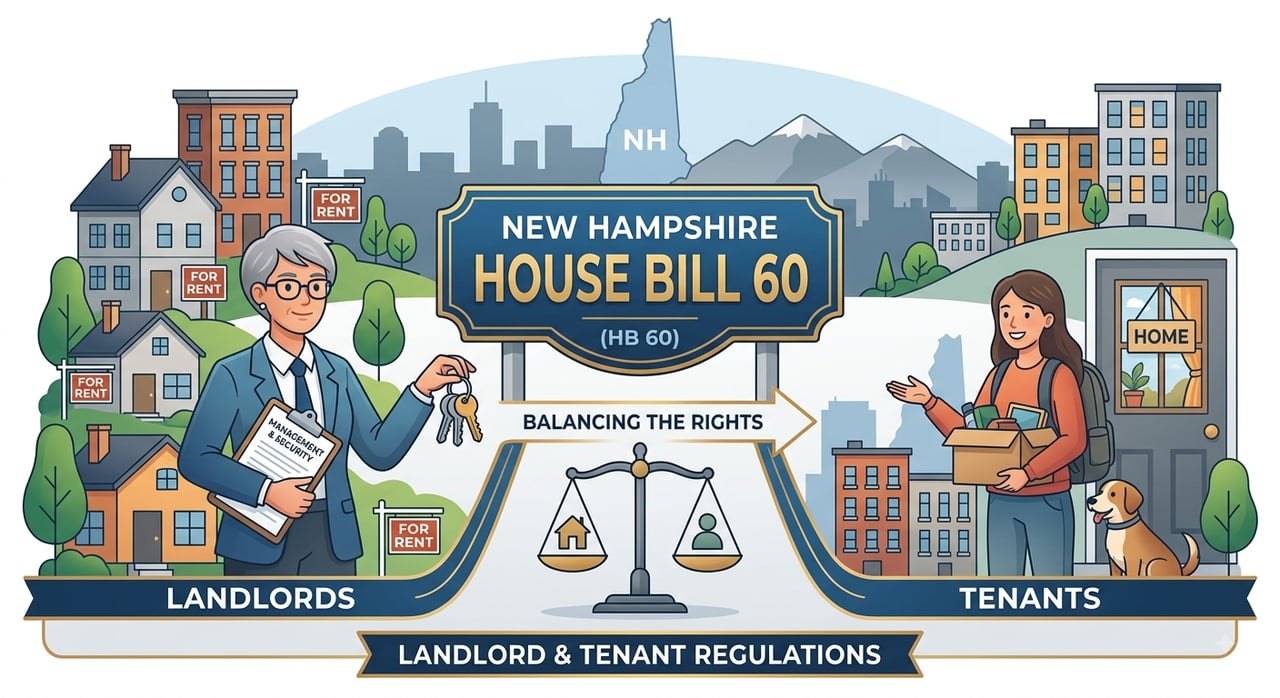
If you rent property in New Hampshire — or you’re a tenant trying to understand your rights — there’s a significant legal change on the way. Governor Kelly Ayotte has signed House Bill 60 into law, and it reverses two decades of tenant protection precedent in the state.
Here’s what’s changing, why it matters, and what both landlords and tenants should do to prepare.
## The Backstory: A 2005 Court Decision
Since 2005, New Hampshire landlords have needed “good cause” to evict a tenant — even after that tenant’s lease term ended. Good cause meant something concrete: nonpayment of rent, property damage, or a lease violation. Simply reaching the end of a lease term wasn’t enough on its own. In practice, this meant a tenant in good standing could often stay in a rental unit indefinitely once their lease expired, as long as they kept paying rent and following the rules.
HB 60’s sponsor, Rep. Bob Lynn — a former NH Supreme Court Chief Justice — argued that decision was wrongly decided and unfairly tipped the scales against property owners by turning what should be a fixed-term contract into something closer to a permanent tenancy.
## What HB 60 Actually Changes
The new law creates a “no-fault termination of tenancy” at the end of a lease. In plain terms: a landlord can now decline to renew a lease and require the tenant to move out, without needing to prove any wrongdoing — as long as they follow the rules the bill lays out.
For leases of 12 months or longer (including renewals that add up to 12+ months), a landlord can end the tenancy at lease expiration if they:
1. Give written notice at least 60 days before the lease termination date, stating the lease won’t be renewed and that the tenant must vacate; and
1. File a possessory action (the legal eviction filing) within 6 months of the lease’s expiration.
Because this type of termination isn’t tied to tenant misconduct, it also won’t show up as an “eviction” on the tenant’s record for future rental applications or tenant screening — an important distinction for renters worried about their long-term rental history.
One note on process: an earlier Senate version of the bill would have delayed the law’s effect until New Hampshire’s rental vacancy rate hit 4%. That provision was dropped in the final conference committee version. The law that Governor Ayotte signed takes effect regardless of the vacancy rate — it’s tied only to the 12-month lease term, not market conditions.
## What Doesn’t Change
It’s worth being clear about the limits of this bill:
- For-cause evictions are unaffected. Landlords can still evict for nonpayment, damage, or lease violations under existing rules, with existing notice requirements.
- Retaliation and discrimination protections remain in place. A landlord can’t use “no-fault” termination as cover for retaliating against a tenant (for example, for reporting a code violation) or for discriminating on a protected basis.
- Shorter leases and month-to-month tenancies work differently. The 12-month threshold matters — this specific provision is built around longer-term leases.
## Why This Is Controversial
Supporters, including landlord groups, argue this makes leases function like actual contracts and may encourage landlords to take a chance on tenants they’d otherwise screen out, since they know they have a clean exit if things don’t work out.
Opponents — including tenant advocates, legal aid organizations, and some lawmakers — point to New Hampshire’s rental market: vacancy rates have been running below 1% for two-bedroom units in recent years, far under the roughly 5% that housing economists consider a “balanced” market. Critics worry that in a market this tight, a no-fault nonrenewal could functionally mean a tenant has nowhere else to go, and that the impact will fall hardest on vulnerable renters — seniors, people with disabilities, and families with children.
## What Landlords Should Do Now
- Build the 60-day notice into your renewal calendar. If you’re not planning to renew a lease, you’ll need to track this deadline carefully — missing it forfeits the no-fault option for that lease term.
- Don’t confuse this with a shortcut around for-cause procedures. If there’s an actual lease violation, the standard for-cause process (and its own notice requirements) still applies.
- Document the reason for non-renewal internally, even though you don’t have to state one to the tenant — this protects you if a tenant later alleges retaliation or discrimination.
- Talk to a real estate attorney before relying on this provision, especially while case law develops around it.
## What Tenants Should Know
- A lease renewal is not guaranteed, even if you’ve paid on time and followed every rule. Read your lease’s term length and renewal language closely.
- You’re entitled to 60 days’ written notice if your landlord doesn’t plan to renew — start looking for alternative housing as soon as you receive that notice, don’t wait.
- This won’t hurt your rental history the way a for-cause eviction would, which matters for your next application.
- Retaliation and discrimination protections still apply — if you suspect a non-renewal is actually retaliatory or discriminatory, that’s a separate legal question worth raising with a tenant advocate or attorney.
## The Bottom Line
HB 60 is one of the more consequential changes to New Hampshire’s landlord-tenant law in twenty years. It shifts real leverage back toward property owners at the end of a lease term, while preserving core protections against retaliation and discrimination during the tenancy itself. Whether you’re managing rental property or renting your home, understanding the 60-day notice and 6-month filing windows now — before you’re navigating a live nonrenewal — will save you a lot of stress later.
This post is for general informational purposes and isn’t legal advice. If you’re facing a specific landlord-tenant situation, consult a licensed New Hampshire attorney.